Address
304 North Cardinal
St. Dorchester Center, MA 02124
Work Hours
Monday to Friday: 7AM - 7PM
Weekend: 10AM - 5PM
Address
304 North Cardinal
St. Dorchester Center, MA 02124
Work Hours
Monday to Friday: 7AM - 7PM
Weekend: 10AM - 5PM

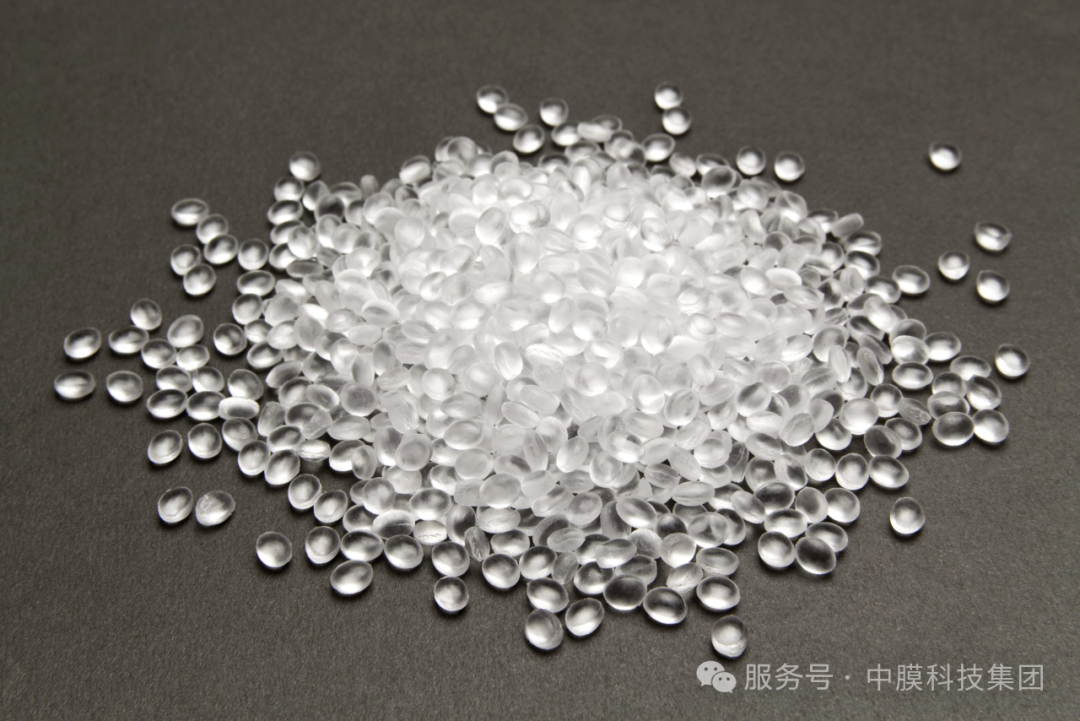
Polypropylene (PP) is essentially a semi-crystalline polymer, and its products are typically white and translucent (such as common plastic lunch boxes). To produce “transparent polypropylene,” the key lies in suppressing its crystallization process, causing it to form smaller, more uniform crystals, or even exhibit an amorphous form, thus allowing light to pass through more easily, improving transparency and surface gloss.
There are three main technical pathways to achieve this goal, which can be used individually or in combination to form a complete technical system:
I. Chemical Methods: Introducing “Interfering Agents” During Polymerization
This method involves fundamentally modifying the molecular structure during the production of polypropylene raw materials.
Principle: During propylene polymerization, a small amount of comonomer (most commonly ethylene, typically at 1-4%) is intentionally introduced.
Process: The ethylene monomer randomly inserts into the long-chain molecules of polypropylene. These “irregular” ethylene units disrupt the regularity of the molecular chains, like inserting people of different heights into a neatly arranged line, making it difficult for the polymer chains to arrange themselves tightly and orderly into large crystalline regions.
Result: Random copolymer polypropylene is generated. Its crystallinity is significantly reduced, and the crystal size is smaller, thus improving transparency, flexibility, and impact toughness (especially low-temperature toughness), but rigidity, strength, and heat resistance are slightly lower than homopolymer PP. It is commonly used for films requiring transparency and flexibility, and injection-molded products (such as transparent storage boxes and medical instruments).
II. Physical method: Adding a “transparent nucleating agent” during processing
This is currently the most widely used, economical, and efficient mainstream method. Simply put, it involves adding “seed crystals” to molten polypropylene to guide the formation of countless tiny crystals.
The role of the nucleating agent is to provide a large number of uniform heterogeneous nucleation sites. During melt cooling, PP molecules simultaneously crystallize around these nucleating agents, forming numerous, extremely small spherulites (smaller than the wavelength of visible light).
The tiny crystal size significantly reduces light scattering, thus dramatically improving transparency and surface gloss. It also accelerates crystallization (shortening processing time), and improves rigidity, heat distortion temperature, and dimensional stability.
Polymer nucleating agents: Such as vinyl cycloalkanes-based polymers, which also effectively improve transparency.
III. Processing Technology: Rapid Cooling and Rapid Molding
Even with good raw materials and additives, the processing technology is crucial.
Principle: Rapidly cooling molten PP below its glass transition temperature prevents the polymer chains from achieving large-scale orderly alignment and crystal growth.
Method: Using low-temperature molds (ice-water mold temperature controllers) or cold air/water baths for quick cooling during injection molding, blown film production, and bottle blowing.
Effect: Inhibits the formation of large spherulites and promotes the formation of smaller crystals or amorphous regions, thereby improving transparency. However, excessively rapid cooling may increase internal stress.
This is the core process for producing ultra-high transparency PP films.
Process: First, PP sheets are cast, then subjected to high-strength stretching at high temperatures in both the longitudinal and transverse directions.
Effect: Stretching disrupts the original crystal structure, causing the molecular chains to highly oriented along the stretching direction, forming a new, highly ordered microstructure with extremely small crystal sizes. This structure exhibits minimal light scattering, resulting in BOPP films with extremely high transparency, gloss, and mechanical strength, widely used in food packaging, tapes, etc. Production Process Summary
Integrating the above technologies, the typical production process for high-transparency polypropylene products is as follows:
After extrusion, the mixture is water-cooled and pelletized to produce high-transparency modified polypropylene granules (this is the “transparent PP material” purchased on the market).
Molding is performed using rapid mold filling and low-temperature mold quenching process parameters.
For films, casting quenching or biaxially oriented polypropylene (BOPP) processes may be used.
In summary, producing transparent polypropylene is a comprehensive art combining “molecular design + additive technology + process control.” By altering the molecular structure through random copolymerization, adding transparent nucleating agents to control the crystal morphology, and employing rapid molding processes such as quenching, this three-pronged approach transforms the originally semi-crystalline, semi-transparent polypropylene into a crystal-clear, high-performance transparent material.