

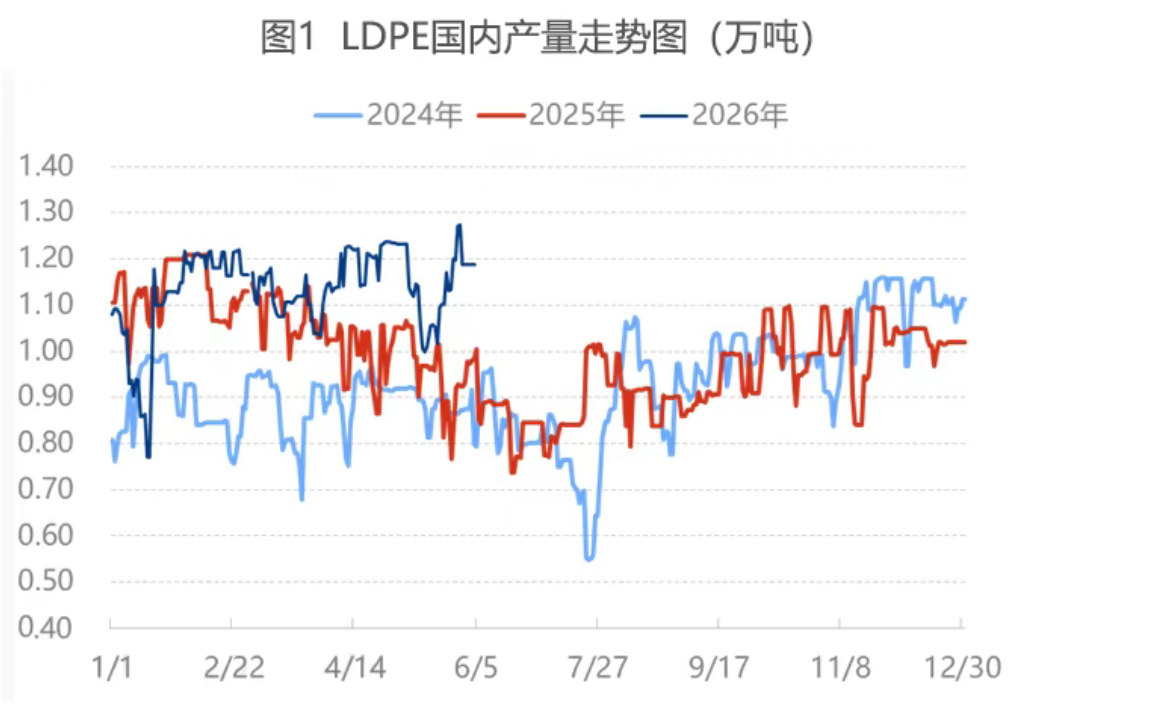
The domestic Chinese LDPE market faces sustained downward pressure with falling price levels recently. Multiple overlapping bearish factors have triggered a sharp correction in LDPE spot prices across the country. New production increments from converted petrochemical units coincide with the traditional off-season demand period. Resumed operation of domestic maintenance units and weak crude oil cost support further weigh on the market. LDPE spot prices have officially broken the 10,000-yuan threshold with sluggish trading and prevalent bearish sentiment.
1. Surge in Domestic LDPE Supply Shifts Market Tightness to Abundance
Sierbang Petrochemical’s co-production unit completed conversion and stable LDPE output in late May. Major producers including Wanhua Chemical and Maoming Petrochemical have restarted their previously maintained LDPE units. Concentrated market supply releases completely reverse the early tight supply situation in China’s LDPE market. Domestic weekly LDPE output achieves a 2.44% month-on-month increase with sufficient overall market supply. Loose supply conditions reshape market sentiment and strengthen bearish expectations. Traders show strong willingness to destock and continuously launch low-priced LDPE spot goods. The overall spot price trend maintains a consistent downward track. As of June 4, mainstream LDPE quotations in North China market fall to 9,700-9,950 RMB per ton.
2. Traditional Off-season Drags Down End-user Demand and Rigid Purchases
The May-June period marks the traditional consumption off-season for the global and Chinese LDPE industry. Terminal market demand remains sluggish and fails to provide effective support for raw material procurement. Spring order cycles for the core downstream agricultural film industry have been fully completed. The greenhouse film and mulch film markets enter a seasonal demand gap stage. The operating rate of national agricultural film enterprises drops slightly by 0.1% month on month. The agricultural film sector faces a severe shortage of new orders and low rigid raw material purchase volume. Industrial inventory fluctuates narrowly while the overall operating level stays weak.
The packaging film market also continues its sluggish operating trend with only sporadic short-term orders. New order follow-up speed slows down obviously with insufficient incremental market demand. Order support for the packaging film industry remains relatively weak throughout the period. Downstream factories adopt a cautious purchase strategy of buying only for immediate use. Manufacturers conduct small-batch raw material restocking without any inventory hoarding intention. End users show low acceptance of high-priced LDPE raw materials. The overall industrial operating rate is expected to drop by another 1% in the short term.
3. Weakened Crude Oil Prices Undermine Raw Material Cost Support
International crude oil prices witness phased fluctuations with declining average prices from May 28 to June 3, 2026. As of June 3, WTI crude oil quotes rise 8.01% month on month to 96.02 US dollars per barrel. Brent crude oil prices increase 4.38% month on month to 97.81 US dollars per barrel. Short-term oil price rebounds are mainly driven by escalating Middle East geopolitical tensions. Low-intensity military conflicts persist between the US and Iran in the regional market. Iran’s military strikes on Kuwaiti targets raise market concerns over crude oil supply disruptions. These risk sentiments provide temporary bottom support for international crude oil prices.
The international crude oil market is projected to enter a sustained downward fluctuation channel in the future. WTI crude oil will mainly operate within the range of 90-98 US dollars per barrel next week. Brent crude oil is expected to fluctuate between 92-100 US dollars per barrel. Continuous positive peace signals from the US ease Middle East geopolitical tensions effectively. Market expectations of large-scale regional conflicts fade rapidly. Early geopolitical bullish factors for crude oil prices gradually diminish. Oil prices lack upward momentum and will further weaken LDPE’s raw material cost support.
4. Sustained Bearish Momentum Leaves Further Downside Room for LDPE Prices
Short-term LDPE market operations are dominated by concentrated and continuous bearish driving factors. On the supply side, Sierbang Petrochemical’s LDPE unit will maintain stable mass production in June. Domestic LDPE market supply increases steadily with falling import commodity prices. Market goods supply turns abundant and intensifies industry competition. On the demand side, seasonal off-season effects continue to dominate the LDPE consumer market. Sluggish downstream operation rates and insufficient new orders are hard to reverse in the short run. Rigid raw material procurement demand remains at a low level.
On the cost side, international crude oil prices maintain a clear downward fluctuation trend. Raw material cost support for the LDPE industry continues to weaken and loosen. Superimposed multiple persistent bearish factors make market bearish sentiment hard to repair quickly. LDPE prices lack effective bottoming and stabilization power in the short term. The domestic LDPE market will continue the weak downward trend in the near future. Industry prices are expected to have a further downside space of 200-300 yuan per ton.
Key Takeaways & LDPE Market Outlook
The 2026 mid-year LDPE market correction stems from the resonance of supply expansion, seasonal demand weakness and falling energy costs. No positive turning points have appeared to reverse the current weak market pattern. Investors, traders and downstream manufacturers need to focus on crude oil price fluctuations and domestic unit operation changes. Continuous attention should be paid to terminal order recovery status for subsequent market judgment. LDPE prices will remain under pressure with limited rebound space in the short and medium term.